Why dry weight matters
If you weigh soya before soaking, log the dry amount. If you weigh it after boiling and squeezing, log a cooked entry. The packet label usually reports dry product, while a food scale on your plate measures the hydrated food.
By [AUTHOR NAME] · FitTrackPro · · Method & sources
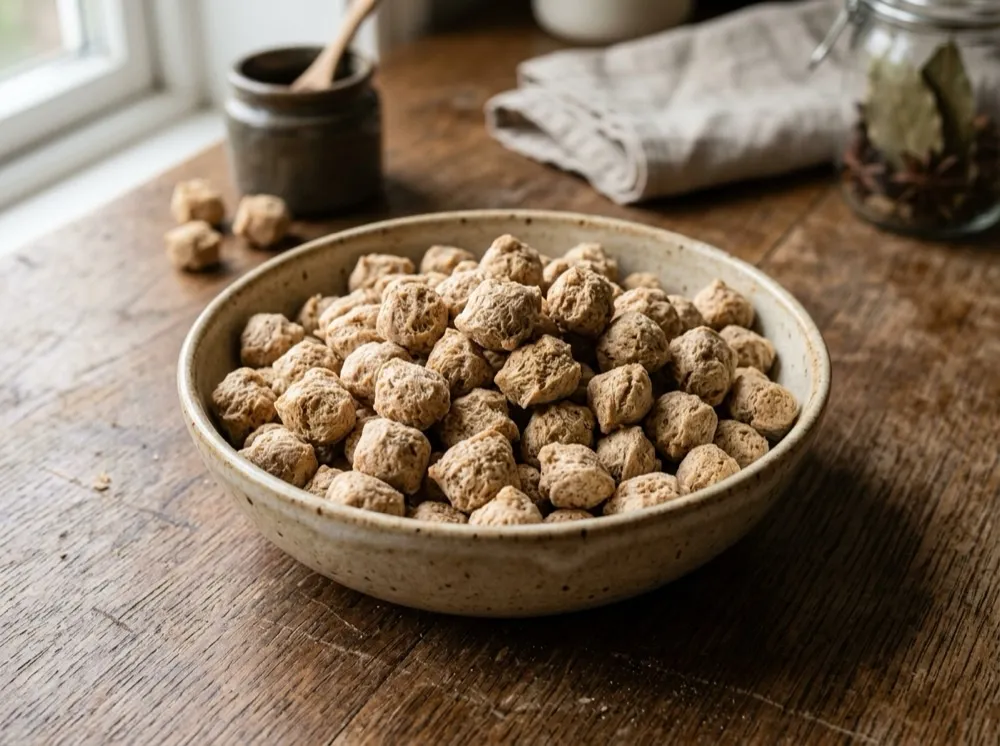
A 50g dry serving of soya chunks provides approximately 26g protein and 170 kcal. Cooking adds water, so always match the database entry to the weight you measured.
Quick answer
| Measured portion | Food state | Protein | Calories |
|---|---|---|---|
| 25g | Dry | 13.0g | 85 kcal |
| 50g | Dry | 26.0g | 170 kcal |
| 100g | Cooked / rehydrated | 16.9g | 173 kcal |
The dry and cooked rows use different standardized references. Water absorbed during cooking changes the weight; do not use one row as a direct substitute for the other.
If you weigh soya before soaking, log the dry amount. If you weigh it after boiling and squeezing, log a cooked entry. The packet label usually reports dry product, while a food scale on your plate measures the hydrated food.
Add cooked soya to a roti, rice or vegetable meal, then check whether your full day meets its protein and calorie targets.
About 26g protein and 170 kcal using the standardized dry-weight reference on this page.
Soaking mainly adds water and changes weight. Discarding water or cooking losses can change the final amount slightly, but the biggest tracking error is comparing dry grams with cooked grams.