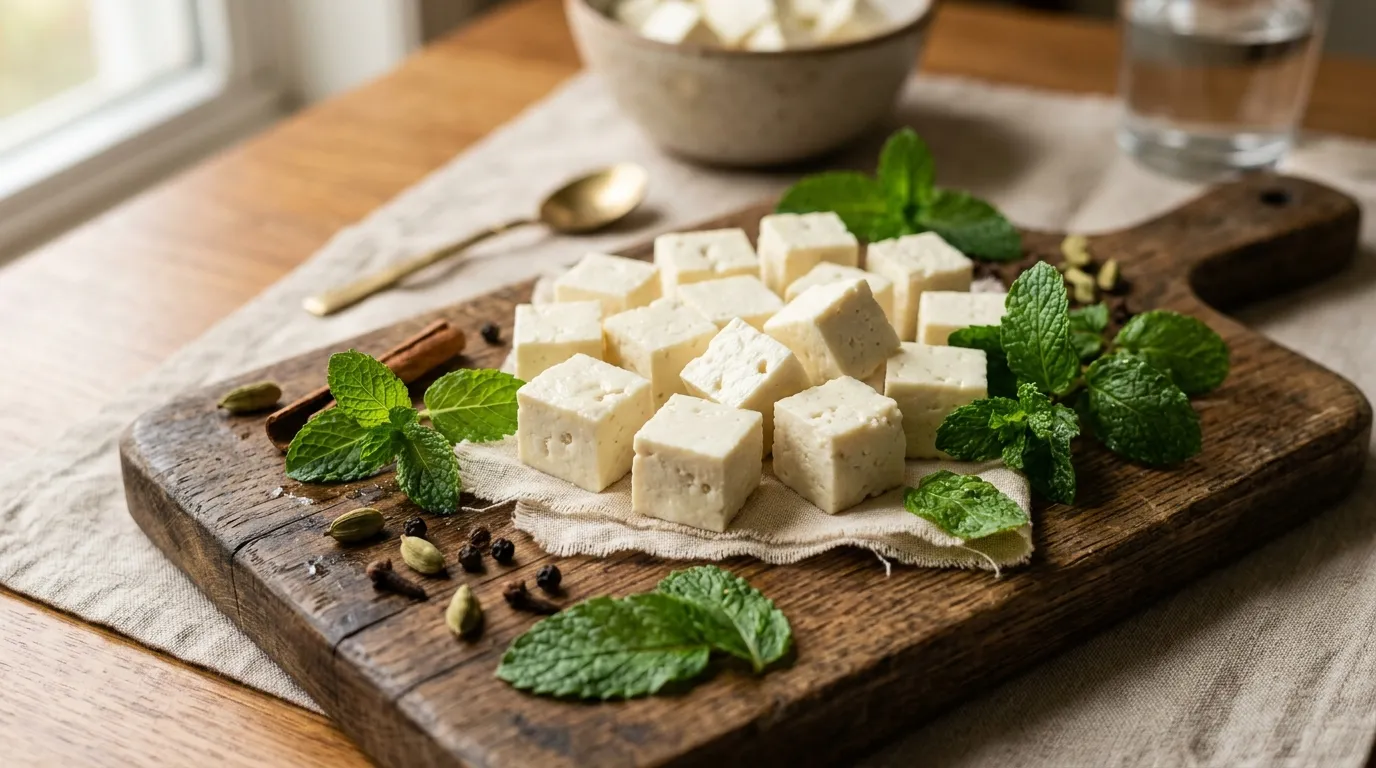
How Much Protein Do You Need Every Day?
Protein provides the essential amino acids your body needs for tissue repair, enzymes, immunity, and maintaining muscle mass. How much you need each day depends primarily on two factors: your body weight and your physical activity level.
In India, the Indian Council of Medical Research - National Institute of Nutrition (ICMR-NIN 2020/2024) recommends a baseline Recommended Dietary Allowance (RDA) of 0.83 grams per kilogram of body weight per day for a healthy sedentary adult. This works out to approximately:
- ~50 grams/day for a 60 kg adult
- ~58 grams/day for a 70 kg adult
- ~66 grams/day for an 80 kg adult
This basic RDA is designed to maintain nitrogen balance and prevent deficiency in everyday sedentary life. However, if you are regularly active, lifting weights, or dieting to lose body fat, research shows that your protein requirements increase significantly beyond the basic baseline.
Protein Calculator by Body Weight
Because protein needs scale with your body mass, calculating your intake in grams per kilogram of body weight (g/kg) gives you the most reliable target. Here is how daily protein needs scale across realistic body weights common in India:
| Body Weight | General Health (0.83 g/kg) | Active Fitness (1.2–1.4 g/kg) | Muscle Building (1.6–2.2 g/kg) | Fat Loss / Cutting (1.6–2.2 g/kg) |
|---|---|---|---|---|
| 50 kg (110 lbs) | 42 g/day | 60 – 70 g/day | 80 – 110 g/day | 80 – 110 g/day |
| 55 kg (121 lbs) | 46 g/day | 66 – 77 g/day | 88 – 121 g/day | 88 – 121 g/day |
| 60 kg (132 lbs) | 50 g/day | 72 – 84 g/day | 96 – 132 g/day | 96 – 132 g/day |
| 65 kg (143 lbs) | 54 g/day | 78 – 91 g/day | 104 – 143 g/day | 104 – 143 g/day |
| 70 kg (154 lbs) | 58 g/day | 84 – 98 g/day | 112 – 154 g/day | 112 – 154 g/day |
| 75 kg (165 lbs) | 62 g/day | 90 – 105 g/day | 120 – 165 g/day | 120 – 165 g/day |
| 80 kg (176 lbs) | 66 g/day | 96 – 112 g/day | 128 – 176 g/day | 128 – 176 g/day |
| 85 kg (187 lbs) | 71 g/day | 102 – 119 g/day | 136 – 187 g/day | 136 – 187 g/day |
| 90 kg (198 lbs) | 75 g/day | 108 – 126 g/day | 144 – 198 g/day | 144 – 198 g/day |
| 100 kg (220 lbs) | 83 g/day | 120 – 140 g/day | 160 – 220 g/day | 160 – 220 g/day |
*If you carry significant extra weight, calculating protein based on your total scale weight can yield an unnecessarily high number. In that case, basing your calculation on your target healthy weight or using our Ideal Weight Calculator or Body Fat Calculator is a sensible approach.
Protein for Muscle Gain
Building muscle requires challenging your muscles through resistance training (weight training, calisthenics, or bodyweight exercises) and giving your body enough protein to recover and grow.
When using a protein calculator for muscle gain, here is what the scientific evidence actually shows:
- How much is enough? A major systematic review of 49 resistance-training studies (Morton et al., British Journal of Sports Medicine, 2018) found that the benefits of protein on muscle growth plateaued around 1.62 g/kg/day for most people, with the upper confidence range extending to approximately 2.2 g/kg/day. You do not need to force down extreme amounts beyond 2.2 g/kg.
- Total calories matter: Protein alone does not build muscle. If you are eating too few total calories, your body uses dietary protein for energy instead of muscle building. A modest calorie surplus helps fuel intense workouts and recovery.
- Consistency beats perfection: Hitting a consistent protein target week after week alongside progressive training is far more effective than stressing over minute-by-minute nutrient timing.
- Supplements are optional: While whey protein is convenient, you can achieve your full muscle-building target using whole foods like eggs, paneer, chicken, fish, soya chunks, and curd.
Protein for Weight Loss
Weight loss requires eating fewer calories than you burn (a calorie deficit). When you are in a deficit, your body burns stored fat for energy, but it can also break down muscle tissue if protein intake is too low.
Keeping protein higher (typically 1.6 to 2.2 g/kg/day) during weight loss helps in three practical ways:
- Preserves Lean Muscle: Eating enough protein ensures that the weight you lose comes primarily from fat rather than your metabolically active muscle tissue.
- Helps Control Hunger (Satiety): Protein keeps you feeling full for longer compared to refined carbohydrates or snacks, making it much easier to stick to your calorie deficit without constant cravings.
- Thermic Effect of Food: Your body uses roughly 20% to 30% of protein's energy just to digest and process it, compared to 5% to 10% for carbohydrates and under 3% for fats.
To find your personal calorie target alongside your protein goal, calculate your daily deficit with our Calorie Deficit Calculator.
Protein for Healthy Weight Gain
If you want to gain healthy weight, eating more protein alone will not cause your weight to go up. Weight gain fundamentally requires a calorie surplus—consuming more total energy than you expend each day.
To ensure that gained weight is healthy muscle mass rather than excess body fat:
- Set your protein target to 1.6 to 2.0 g/kg/day, which fully supports new tissue growth.
- A modest calorie surplus (such as 250 to 450 calories above your maintenance needs) is commonly used to support steady weight gain without unwanted fat accumulation.
- Include nutrient-dense Indian foods like milk, paneer, roasted peanuts, bananas, whole wheat rotis, and dal to comfortably reach your daily calorie target.
- Pair your diet with structured resistance training so the extra energy is directed toward muscle building.
Protein for General Health
If you are not an athlete and do not lift heavy weights, your protein requirement is guided by the official ICMR-NIN Recommended Dietary Allowance (RDA) of 0.83 g/kg/day.
This baseline recommendation is designed to cover the basic physiological needs of 97.5% of healthy adults. For a 65 kg adult, eating 54 grams of protein daily from a variety of pulses, rotis, dairy, or eggs provides enough amino acids for daily wellness, immune function, and organ health.
For older adults (above 50 years), clinical guidelines often recommend slightly higher intakes—around 1.0 to 1.2 g/kg/day—to protect against age-related loss of muscle strength (sarcopenia) and support bone health.
High-Protein Indian Foods
The table below gives stored FitTrackPro food values using household servings and grams where available. The database does not keep a source citation for every row; check each serving and food state, and read the nutrition methodology before treating a number as a directly cited IFCT 2017 value:
Vegetarian Indian Protein Sources
| Food Item | Serving Size | State | Protein | Calories |
|---|---|---|---|---|
| Soya Chunks (Nutrela) | 50 g (makes 1 medium bowl) | Dry weight | 26.0 g | 170 kcal |
| Paneer (Cottage Cheese) | 100 g (about 4–5 cubes) | Fresh raw | 18.0 – 20.0 g | 260 – 290 kcal |
| Low-Fat / Cow Milk Paneer | 100 g | Fresh raw | 20.0 – 22.0 g | 180 – 210 kcal |
| Bhuna Chana (Roasted Bengal Gram) | 50 g (1 handful / small katori) | Ready to eat | 9.5 – 10.5 g | 185 kcal |
| Sattu (Roasted Gram Flour) | 30 g (2 rounded tablespoons) | Dry flour | 6.5 g | 120 kcal |
| Cooked Toor / Arhar Dal | 1 standard katori (150 g) | Cooked with tadka | 7.5 – 8.5 g | 135 kcal |
| Cooked Yellow Moong Dal | 1 standard katori (150 g) | Cooked with tadka | 8.5 g | 118 kcal |
| Cooked Chana Dal | 1 standard katori (150 g) | Cooked with tadka | 9.2 g | 155 kcal |
| Cooked Rajma (Kidney Beans) | 1 bowl (175 g) | Cooked with gravy | 11.0 – 13.0 g | 210 kcal |
| Cooked Kabuli Chana (Chole) | 1 bowl (175 g) | Cooked with gravy | 12.0 – 14.0 g | 240 kcal |
| Plain Curd / Dahi | 1 katori (150 g) | Fresh toned curd | 5.5 – 6.0 g | 90 kcal |
| Hung Curd (Dahi) | 100 g | Whey-strained | 9.0 – 11.0 g | 120 kcal |
| Whole Milk | 1 glass (250 ml) | Liquid toned milk | 8.0 – 8.5 g | 150 kcal |
| Whole Wheat Roti / Phulka | 1 medium roti (35 g dough) | Cooked dry | 3.1 – 3.4 g | 85 kcal |
| Peanuts (Moongfali) | 30 g (small handful) | Roasted | 7.5 – 8.0 g | 175 kcal |
| Tofu (Soy Paneer) | 100 g | Fresh block | 12.0 – 14.0 g | 110 kcal |
Non-Vegetarian Indian Protein Sources
| Food Item | Serving Size | State | Protein | Calories |
|---|---|---|---|---|
| Whole Large Eggs | 2 large eggs (~100 g) | Boiled | 12.6 g (6.3g/egg) | 148 kcal |
| Egg Whites | 3 whites (~100 g) | Cooked | 11.0 g (~3.6g/white) | 52 kcal |
| Chicken Breast | 150 g cooked (1 breast / 1 bowl) | Cooked skinless | 46.5 g | 247 kcal |
| Indian Fish (Rohu / Catla / Surmai) | 150 g fillet (1 medium piece) | Cooked curry/pan | 28.0 – 32.0 g | 180 – 210 kcal |
Want to track exact plate calories and macros for traditional Indian foods? Explore interactive plate builder. Or browse the complete Indian Food Nutrition Database →
Protein in Common Indian Meals
Most of us eat combinations rather than single ingredients. Here is how much protein standard Indian meal combinations deliver:
1 katori toor/moong dal (8g) + 2 whole wheat rotis (6.5g) + 1 bowl curd (5.5g) = ~20 g protein
Balanced everyday vegetarian lunch staple1.5 katoris rajma (13g) + 1 katori cooked rice (3.5g) + cucumber salad = ~16.5 g protein
Traditional Sunday staple with high soluble fiber100g paneer bhurji (19g) + 2 whole wheat rotis (6.5g) = ~25.5 g protein
High-yield dinner for muscle gain or maintenance2 whole eggs (12.6g) + 2 rotis (6.5g) + 1 glass milk (8g) = ~27 g protein
Excellent quick-prep morning breakfast combination50g dry soya chunks cooked in curry (26g) + 2 rotis (6.5g) = ~32.5 g protein
Top vegetarian protein-density per rupee and calorie150g chicken breast (46.5g) + 1 katori dal (8g) + rice (3.5g) = ~58 g protein
High-protein non-vegetarian post-workout lunch or dinnerCurious how individual breads compare? Check calories and protein for phulkas, parathas, and bajra rotis with our Roti Calorie Calculator, or compare dal varieties using our Dal Calorie Calculator.
What Does Your Protein Target Look Like in Indian Food?
One of the biggest search questions in India is: "What does 100g of protein look like in Indian food?"
Hitting 100 grams of daily protein does not require force-feeding yourself 15 eggs or drinking multiple protein shakes. Here is a realistic breakdown showing how 100g of protein fits comfortably into a standard Indian day:
2 Whole Eggs + 1 Glass Milk (250ml) + 1 Roti (Or 80g Paneer Bhurji + Milk)
1.5 Katoris Moong/Chana Dal (13g) + 2 Whole Wheat Rotis (6.5g) + 1 Bowl Curd (5.5g)
50g Roasted Chana (10g) + 1 Glass Sattu Drink or Handful of Peanuts (6g)
50g Soya Chunks Curry (26g) + 2 Rotis (6.5g) + Salad (Or 120g Paneer/Tofu / 150g Chicken)
Can You Get Enough Protein From an Indian Vegetarian Diet?
Yes, you can comfortably reach your daily protein requirements on an Indian vegetarian diet. However, it requires conscious planning because traditional vegetarian meals in India tend to be carbohydrate-heavy.
Here are key principles that make an Indian vegetarian diet work:
- Understand the Dal Balance: A standard katori of cooked dal gives you about 7.5 to 8.5 grams of protein, but it also comes with around 18 to 22 grams of carbohydrates. While dal is a wholesome pulse, relying solely on 1 small bowl of dal will leave you short of a higher fitness target.
- Incorporate High-Density Vegetarian Staples: Add items that have a higher protein-to-calorie density:
- Soya Chunks: 52% protein by dry weight. A 50g dry portion gives you 26g of protein for under 175 kcal.
- Low-Fat Paneer: Gives you 20g of protein per 100g with lower saturated fat than full-cream varieties.
- Curd & Greek Dahi: Straining water from homemade dahi produces thick hung curd with 9–11g protein per 100g.
- Roasted Chana (Bhuna Chana): A convenient 50g snack delivering 10g of protein and high prebiotic fiber.
- Amino Acid Variety Across the Day: Legumes are rich in the amino acid lysine but lower in methionine, whereas grains (wheat and rice) are rich in methionine but lower in lysine. Eating both across the course of the day gives your body a complete amino acid profile. You do not have to obsess over eating them in the exact same mouthful.
Protein in Eggs
Eggs are one of the most cost-effective and nutrient-complete protein sources available in India:
- 1 Whole Large Egg: Delivers approximately 6.3 grams of protein and ~72 calories. The white contributes ~3.6g of pure protein, while the yolk contributes ~2.7g of protein along with healthy fats, choline, vitamin B12, and vitamin D.
- Egg Whites: If you are on a strict calorie deficit, egg whites provide almost pure protein (~3.6g per white) with only 17 calories and zero fat.
- Practical Serving: Eating 2 whole eggs with 2 egg whites (boiled or scrambled as an egg bhurji) delivers approximately 20 grams of high-quality protein for around 180 kcal.
Do You Need Whey Protein?
No, whey protein is not mandatory. It is simply a powdered dairy protein derived from milk during the cheese and paneer making process.
Here is when whey protein makes sense and when you don't need it:
- When it is useful: If you work long office hours, travel frequently, or find it difficult to prepare high-protein vegetarian meals, one 30g scoop of whey in water gives you ~24–25g of high-quality protein quickly.
- When it is not needed: If you can reach your daily target through eggs, paneer, chicken, dal, soya chunks, milk, and curd, there is no physical requirement to buy whey protein. Whole foods provide vitamins, minerals, and dietary fiber that supplements do not.
Protein and Calories
Every gram of dietary protein provides 4 calories (kcal).
If your daily target is 110 grams of protein, that represents 440 calories of your daily food intake. The remainder of your daily calories comes from carbohydrates (4 kcal/g) and dietary fats (9 kcal/g).
To understand your total daily calorie budget and ensure your protein target fits smoothly into your weight goals, use our companion calculators:
- Daily Calorie & Macro Calculator — Calculate your full calorie, carb, and fat breakdown.
- Calorie Deficit Calculator — Plan a healthy, sustainable fat-loss deficit.
- BMR Calculator — Find your resting metabolic burn.
- TDEE Calculator — Estimate your total daily energy expenditure based on activity.
Frequently Asked Questions
Clear, practical answers about protein intake, Indian foods, and fitness goals.
How much protein do I need per day? ↓
How much protein do I need based on my weight? ↓
What is a good protein intake for muscle gain? ↓
How much protein should I eat for weight loss? ↓
How much protein is in 1 egg? ↓
How much protein is in 1 katori of dal? ↓
How much protein is in 100 g paneer? ↓
Are dal and roti a good source of protein? ↓
Can Indian vegetarians get enough protein? ↓
How much protein is in soya chunks? ↓
Do I need whey protein? ↓
Is this protein calculator suitable for Indians? ↓
Sources & Methodology
Authoritative Nutrition References:
- ICMR-NIN (2020 brief note): Indian Council of Medical Research & National Institute of Nutrition. Nutrient Requirements for Indians and Dietary Guidelines for Indians. NIN, Hyderabad.
- Food composition: FitTrackPro database serving records. Per-food citations are not stored; see the nutrition methodology for this limitation.
- Morton et al. (2018): A systematic review, meta-analysis and meta-regression of the effect of protein supplementation on resistance training-induced gains in muscle mass and strength in healthy adults. British Journal of Sports Medicine, 52(6):376-384.
- International Society of Sports Nutrition (ISSN 2017): Position Stand on protein and exercise. Journal of the International Society of Sports Nutrition, 14:20.
- Food and Nutrition Board: Dietary Reference Intakes (DRI) for energy and macronutrients, National Academies Press.
Medical Disclaimer: The calculations and food portion guidance provided on this page are educational estimates for fitness and general nutrition planning. They are not medical prescriptions. Individuals with pre-existing kidney disease, liver conditions, metabolic disorders, pregnant or breastfeeding women, or those on medically supervised diets should consult a qualified healthcare professional or clinical dietitian before making significant changes to their daily protein intake.